Mahjong Voyage: Tile Matching
- 4.8
- Rating
- 5.00M
- Installs
- Free
- Price

 Analysis by App-foxy
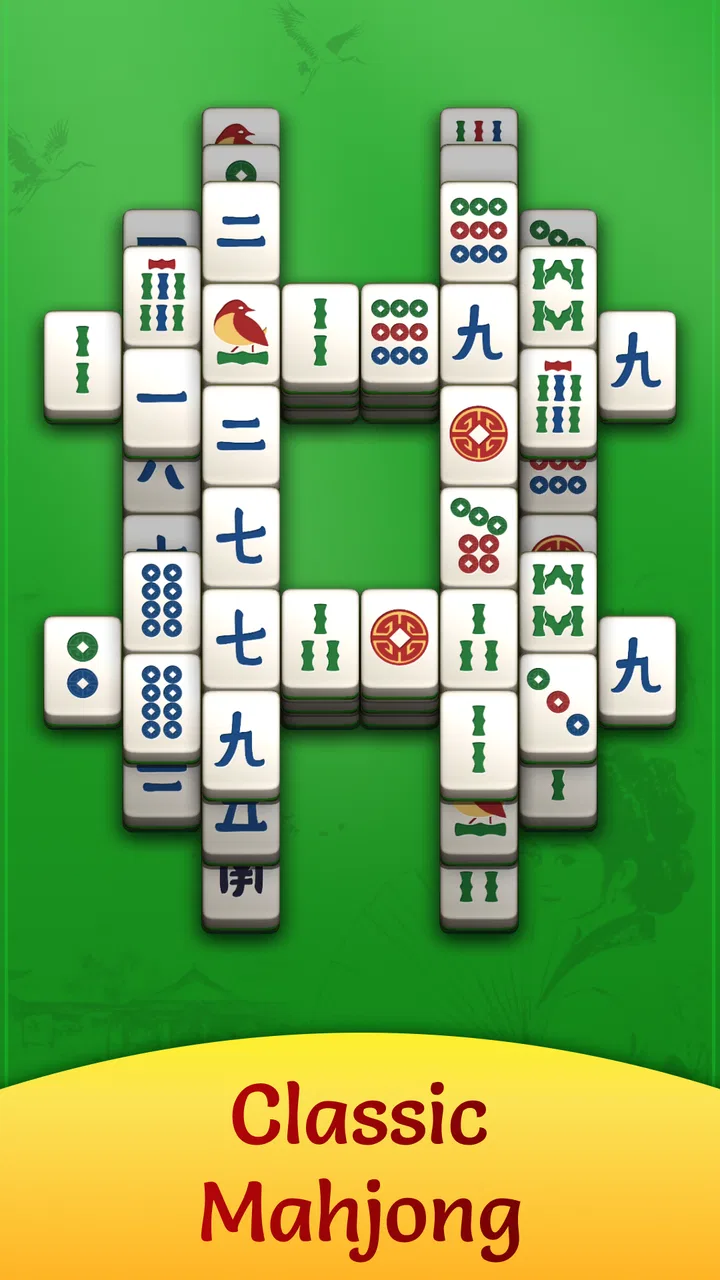
I first approached Mahjong Voyage: Tile Matching as a quiet board game for short breaks, but it works especially well when one device is shared around the house. The basic idea is easy to understand: match open tiles, clear the board, and gradually create a peaceful-looking paradise. That simplicity makes it approachable for someone who does not normally play mobile games, while the tile layouts still give me enough to think about before every move.
Developed by Bluetile, this free game sits in the board-game space rather than trying to be a fast arcade challenge. It is available for Everyone, runs on Android versions from 7.0 onward, and has reached more than a million installs. Those details match my overall impression: this is designed to be broadly accessible, familiar in concept, and easy to pick up without a long tutorial or a complicated control scheme.
What makes it worth considering is not a dramatic new interpretation of Mahjong. Its appeal comes from combining the traditional tile-matching routine with a gentle sense of progression and decoration. I found it most enjoyable when I wanted a focused activity that could fill a few minutes without demanding constant attention. It is less suitable if I am looking for competitive multiplayer, deep strategy between players, or a story-driven adventure.
You May Also Like

 Blood Strike: 2.5 Anniversary
Blood Strike’s Loadouts Turn Every Drop Into a Tactical Gamble
A close look at Blood Strike’s custom loadouts: how fast access to signature weapons reshapes its battle royale rhythm, rewards preparation, and narrows the gap between fights.

 Pandora - Music & Podcasts
Pandora’s Music Is Easy to Start, but Harder to Recover
Pandora’s strength is its low-effort path from a seed to a station. Its weak spot is how much confidence it asks you to place in connection, setup, and quiet recovery.

 8 Ball Pool
 Is Built on Rivalries, Rematches, and Routine
A close look at the rivalries, rematches, shared routines, and unanswered safety questions that turn a quick pool match into a persistent mobile community.

 Samsung Music
’s Quiet Strength Is Playing What You Already Own
Its reach comes less from spectacle than from dependable access to a personal library. That simplicity is both the app’s strongest retention engine and its ceiling.

 AccuWeather: Weather Radar
AccuWeather Review: A Quick, Clear Forecast for Everyday Decisions
For everyday plans, the best forecast is the one you can understand quickly. AccuWeather makes rain timing, radar, and local conditions easy to act on, with a few trade-offs.

 Hill Climb Racing
Why Hill Climb Racing Still Turns Crashes Into One More Run
A tiny car, a bumpy hill and one more upgrade: Hill Climb Racing keeps resurfacing because its simple chaos makes every near-miss feel personal.
More From Our News Desk



How Mahjong Voyage fits into a shared household
When I think about sharing Mahjong Voyage around a household, the key is agreeing on how one person’s choices affect everyone else’s session. I’d make the device handoff feel intentional rather than treating the puzzle as a race to finish, which keeps the calm mood intact. That practical routine also raises a broader question: what makes this particular game feel so suited to quiet, shared play?
A game that works well in short, shared sessions
On a shared phone or tablet, this is the kind of title someone can open while waiting for dinner, during a quiet evening, or between other tasks. One person can complete a board, hand the device to another household member, and keep the experience understandable without needing to explain a long set of rules. The central action is visible immediately, so a casual observer can follow along and offer suggestions without taking over the whole game.
That makes it different from many board games on mobile that depend on several players being present at the same time. Mahjong Voyage is better suited to taking turns with the device than to a formal family match. I would not treat it as a replacement for a physical Mahjong set or a competitive digital board game, but it can become a pleasant shared ritual: one person searches for matches, another watches for a hidden pair, and the device moves back and forth when the board becomes more difficult.
The relaxed presentation also helps in a household where people have different gaming habits. A player who dislikes timers, combat, or complicated menus can still understand what to do. At the same time, someone who enjoys puzzle planning can pause before selecting a tile and think through which match will preserve the most options. That balance is one of the strongest reasons I would recommend it for mixed-age, mixed-interest households.
What the core puzzle feels like in practice
Each board asks me to match identical tiles while respecting the usual availability of tiles in a layered layout. The important decision is not simply spotting a pair; it is deciding whether removing that pair will expose useful tiles or leave the board with fewer workable choices. I quickly learned to look at the edges and upper layers first, especially when several possible matches were visible.
A useful habit is to avoid taking the first obvious pair automatically. If one match opens a covered tile and another only clears space, the opening move is usually more valuable. I also try to remember which symbols have already appeared rather than tapping quickly through the board. This gives the game a little more depth than its calm appearance suggests, particularly when the layout starts to narrow my options.
That planning is also where the game can become frustrating. A careless sequence may leave a board difficult to recover, and the peaceful atmosphere does not remove the need to pay attention. For me, the tension is mild rather than stressful, but players who want completely automatic relaxation may find even this level of decision-making more demanding than expected.
Building a personal boundary around play
Because the game is free to start, it is easy to let a short session become a longer one. I prefer treating it as a defined break: complete a board, stop at a natural point, and return the device. That approach works particularly well on a shared device because nobody has to guess whether someone else is finished or interrupt a complicated multiplayer match.
The game includes optional purchases priced from $0.99 to $2.99 per item. In a household, that is the point where a simple puzzle can become a coordination issue. If children or guests use the same device, I would decide in advance whether purchases are allowed and who is responsible for them. The game itself may be easy to share physically, but payment decisions should remain with the device owner rather than being left to whoever happens to be playing.
I also recommend keeping expectations clear about progress. When several people use one installation, it is sensible to agree that everyone is contributing to the same ongoing experience unless the device offers a separate way to distinguish users. I would not assume that a shared device automatically creates separate player spaces. For a household that needs individual records, private progress, or carefully separated accounts, a game designed around personal profiles would be a better fit.
Coordination without turning the game into a competition
The best shared sessions I had were cooperative in spirit. One person controlled the tiles while another pointed out a possible match, but the person holding the device made the final choice. That small rule prevented the game from becoming noisy or confusing, and it preserved the satisfying feeling of solving the layout personally.
There is a practical reason to coordinate this way: a suggestion that looks good may hide a consequence elsewhere on the board. A second pair of eyes can help spot symbols, yet the player needs time to check which tiles will become available after the move. If everyone calls out instructions at once, the calm puzzle can turn into a rushed guessing exercise.
For younger players, I would use the game as a conversation starter rather than simply handing over the device. Asking why a certain pair should be removed encourages planning and visual attention. The game is not a substitute for a structured educational tool, and I would avoid claiming that every session has a measurable learning outcome, but it naturally invites discussion about order, memory, and consequences.
Age context and trust
The Everyone rating makes the game broadly appropriate from a content perspective, and I found its board-game presentation comfortable for a general household. Still, an age rating does not answer every parenting question. It does not decide how long a child should play, whether a shared device is available, or whether optional spending is acceptable. Those decisions belong to the household routine.
For a child using a parent’s phone, I would explain that the free download does not mean every action connected with the game is free. The in-app purchase range is small, but clarity matters more than the amount. I would also make sure the child knows whether the game is being played on a personal device or on a family device, because that affects whose progress and settings are being changed.
Trust matters for adults sharing the same installation too. Someone may enjoy decorating or progressing through the available experience, while another person may prefer solving boards without changing anything else. The safest arrangement is a simple household agreement: ask before making purchases, avoid resetting or altering another person’s progress, and return the device when the agreed session ends.
Where it stands beside familiar alternatives
Compared with a physical Mahjong solitaire set, Mahjong Voyage is more convenient because the tiles are arranged automatically and the game can be carried on a phone. A physical set offers a tactile experience and makes it easier for several people to handle pieces together, so I would choose the tabletop option for a social gathering or anyone who enjoys the feel of real tiles.
Compared with a competitive Mahjong app, this game is a better choice for solitary matching and casual shared use. It does not appeal to me when I want a live contest, detailed player interaction, or the traditional rules of a full Mahjong match. The title is built around tile clearing, not around reproducing every aspect of the multiplayer tabletop game.
Compared with other mobile matching puzzles, its calmer board-game identity is the main distinction. A match-three game may offer faster turns and more immediate effects, while this one rewards scanning a layout and protecting future moves. I would pick Mahjong Voyage for a quiet break, but I would choose a faster puzzle when I want constant action or a stronger sense of arcade momentum.
Practical strengths and real friction
The strongest practical quality is accessibility. The controls are based on selecting tiles, so the game does not require a complicated gesture vocabulary. That matters on a family tablet, where a player may be unfamiliar with mobile gaming. It also makes the game easy to demonstrate: I can explain the objective by showing one possible match rather than describing a long rulebook.
The main limitation is that the experience depends heavily on enjoying the same basic activity repeatedly. If tile matching does not appeal to me, the peaceful setting alone is unlikely to hold my attention for long. The decorative progression gives the routine a sense of purpose, but it does not transform the game into a broad strategy system.
Another trade-off is the relationship between free access and optional purchases. I appreciate being able to begin without paying, yet I still think households should make a clear decision about spending before sharing the game. Players who want a completely purchase-free environment may prefer a paid board game with no optional items, even if that means paying upfront.
The current version is 2.7.2, and the game has earned a 4.8 average from around 170 thousand ratings, alongside roughly 3.1 thousand written reviews. Those figures suggest that the central formula connects with a large audience, but they should not replace personal judgment. A high average cannot tell me whether I enjoy the pace, whether the visual style suits my taste, or whether shared-device use fits my household.
Who should install it, and who should skip it?
I would recommend it to someone who wants a free board-style puzzle for quiet sessions, especially if they enjoy spotting patterns and thinking one or two moves ahead. It is also a sensible choice for a family that wants a low-pressure game that can be passed between people without requiring everyone to play simultaneously.
I would be more cautious about recommending it to players who need separate accounts, strong competitive features, or a substantial multiplayer experience. I would also point fans of traditional Mahjong toward a more authentic rules-based title if their goal is learning or playing the full tabletop game rather than clearing matching tiles.
For a shared household, the deciding questions are straightforward. Can everyone agree on whose progress is being used? Is the device owner comfortable with optional purchases? Will players take turns rather than compete for control? If the answers are yes, the game fits naturally into a communal routine. If not, an app with distinct profiles or a physical game with clearly separated turns may cause less friction.
My household verdict
After spending time with it, I see Mahjong Voyage as a gentle, focused puzzle rather than a complete digital recreation of Mahjong. Its value comes from making tile matching easy to start, pleasant to revisit, and flexible enough for one person or a small household to share a device. The combination of a free entry point, Everyone rating, and familiar controls lowers the barrier for casual players.
My advice is to approach it with the right expectations. Use it for a short mental reset, a quiet turn-taking activity, or a simple way to introduce someone to tile-matching puzzles. Keep purchases and shared progress clear, and do not expect the depth of a competitive Mahjong table or the variety of a large strategy game.
My final recommendation is positive for calm, casual puzzle fans. Bluetile has made a straightforward board game that is easy to explain and comfortable to share, provided the household treats device access and spending as separate responsibilities. I would install it for relaxed solo play or informal family turns, while choosing another option when individual account boundaries, live competition, or authentic Mahjong rules matter more than a peaceful matching session.
FAQs for Mahjong Voyage: Tile Matching
01What is the main objective of Mahjong Voyage: Tile Matching?
Mahjong Voyage: Tile Matching is a puzzle game where the primary goal is to clear the board by matching identical tiles. Players need to find and pair free tiles, which are tiles not covered by others and have at least one side free. Strategic thinking is essential to succeed.
02Is Mahjong Voyage: Tile Matching free to play?
Yes, Mahjong Voyage: Tile Matching is free to download and play. However, it may offer in-app purchases that enhance the gaming experience, such as extra hints or special tile sets. These are optional and not necessary to complete the game.
03Can I play Mahjong Voyage: Tile Matching offline?
Mahjong Voyage: Tile Matching can be played offline, which is perfect for users who want to enjoy the game without an internet connection. However, certain features, like leaderboards or daily challenges, may require an online connection to function.
04What platforms is Mahjong Voyage: Tile Matching available on?
Mahjong Voyage: Tile Matching is available on both Android and iOS platforms. Users can download it from the Google Play Store for Android devices and the App Store for iOS devices. Ensure your device meets the necessary system requirements for optimal performance.
05Does Mahjong Voyage: Tile Matching offer any special features?
The game offers various special features, such as themed tile sets, daily challenges, and power-ups. These elements add depth to the gameplay and keep it engaging. Players can also track their progress and compete with others through leaderboards, enhancing the competitive aspect.
Pros
- Beautifully designed tile sets and backgrounds.
- Offers both online and offline play modes.
- Regular updates with new challenges.
- Intuitive interface for easy navigation.
- Includes a tutorial for beginners.
Cons
- In-app purchases can be pricey.
- Occasional ads disrupt gameplay.
- Limited hints available without purchase.
- Requires constant internet for updates.
- Some levels can be overly repetitive.

Mahjong Voyage: Tile Matching
Gallery